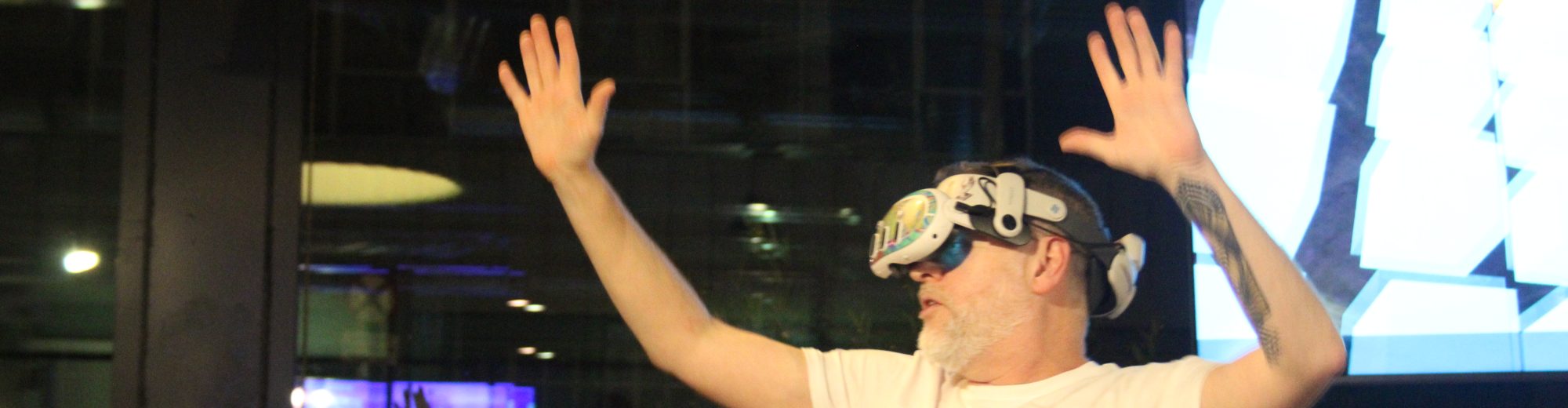
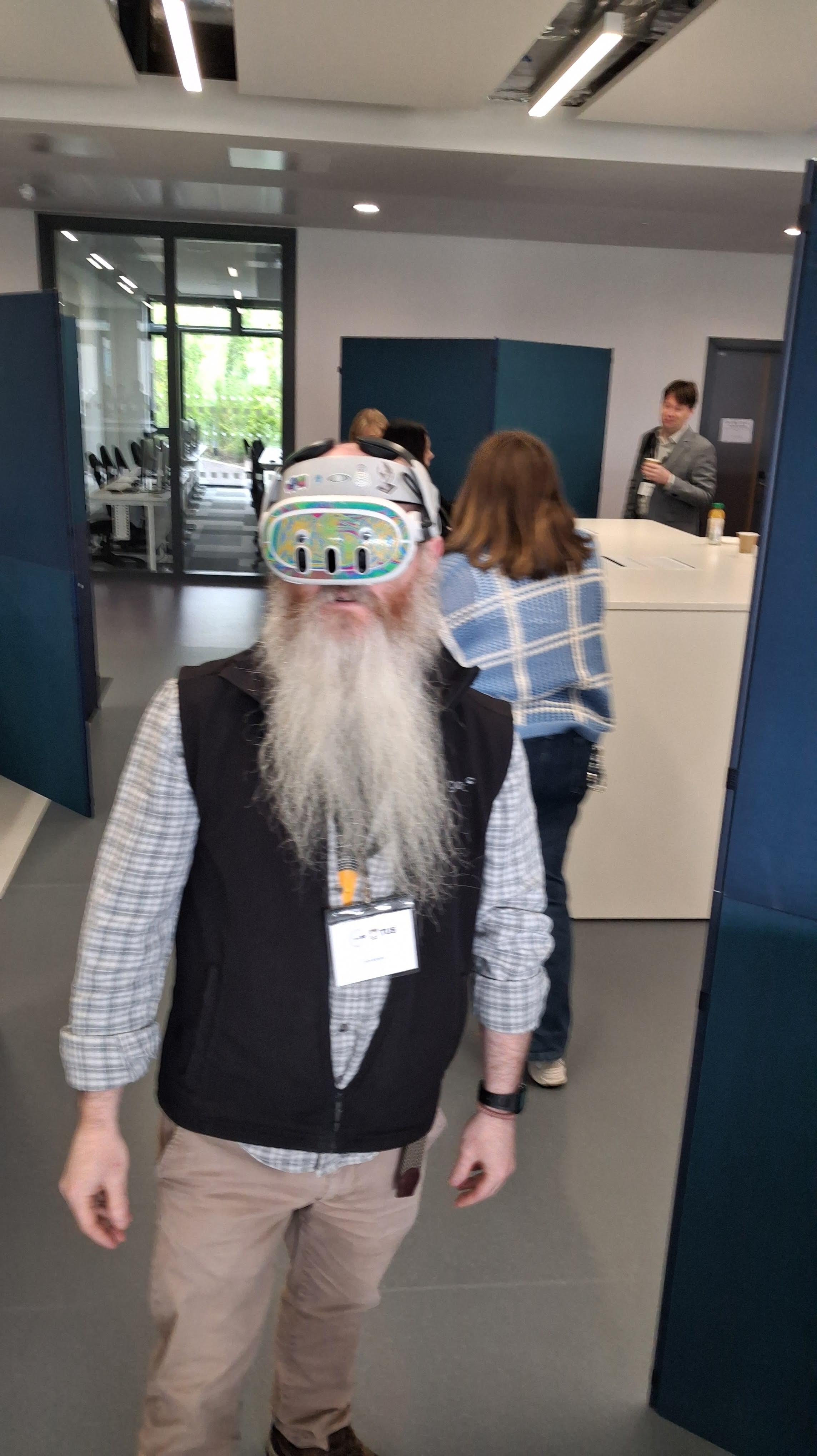
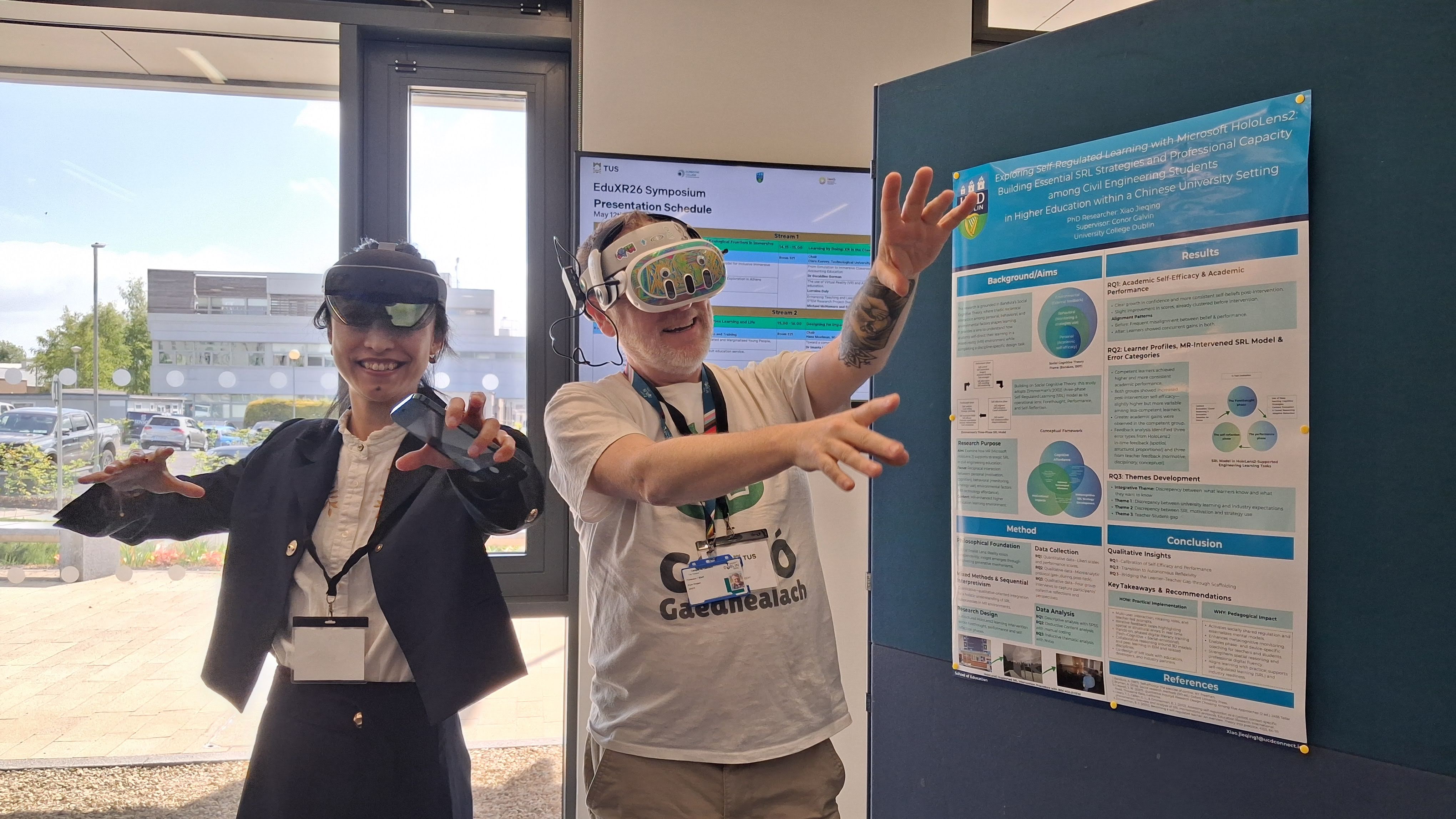
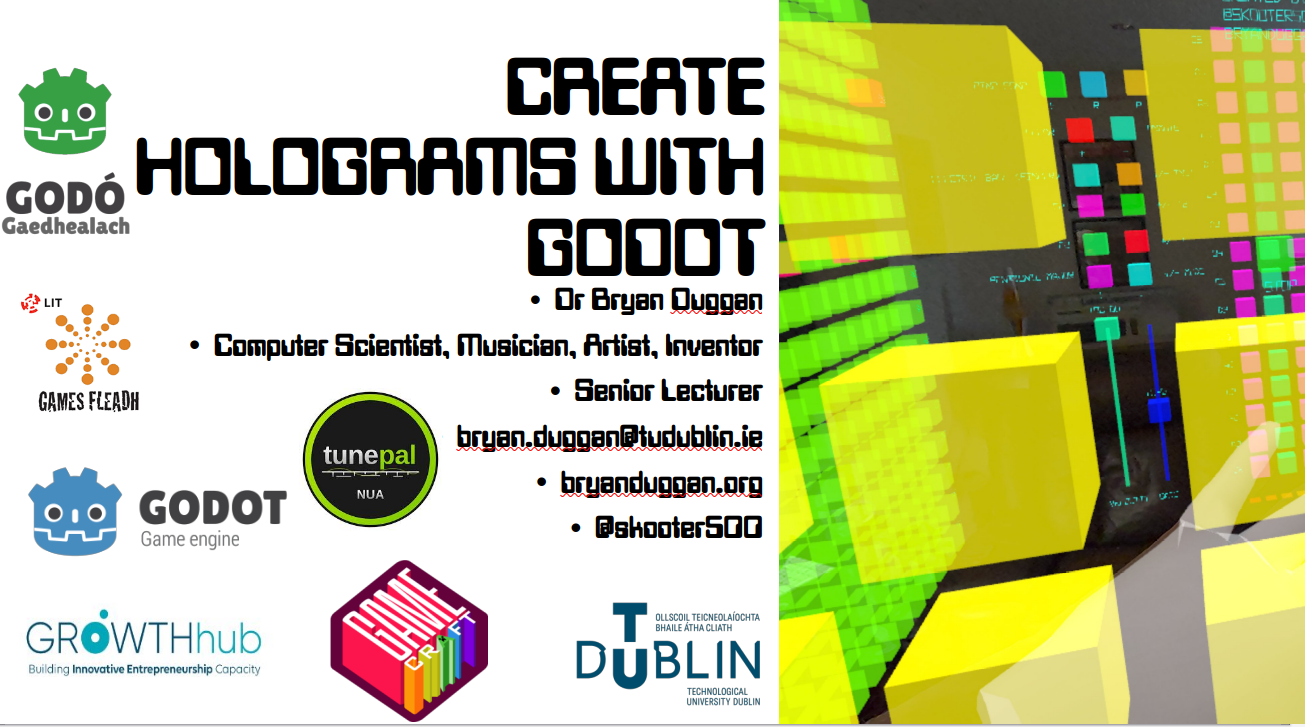
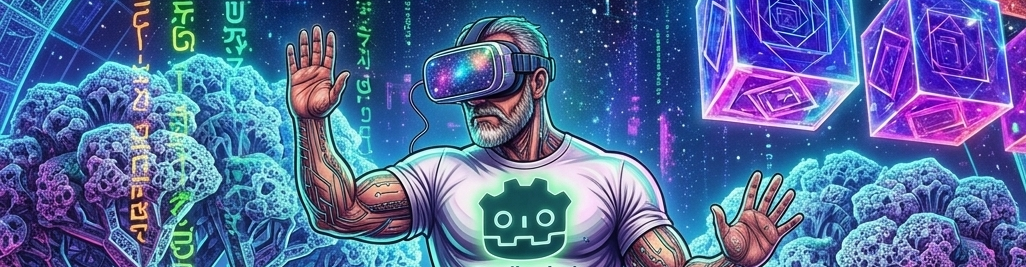
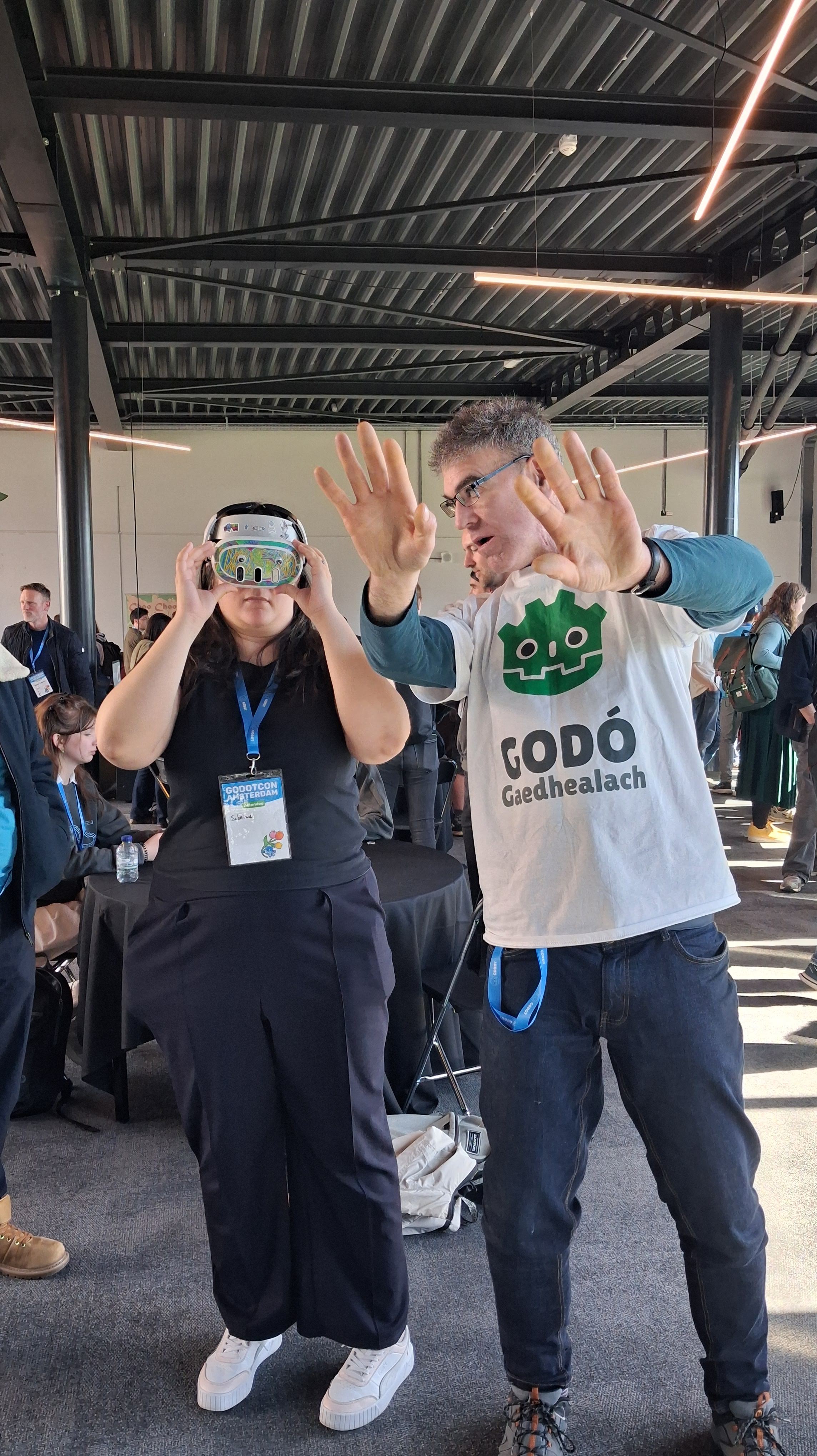
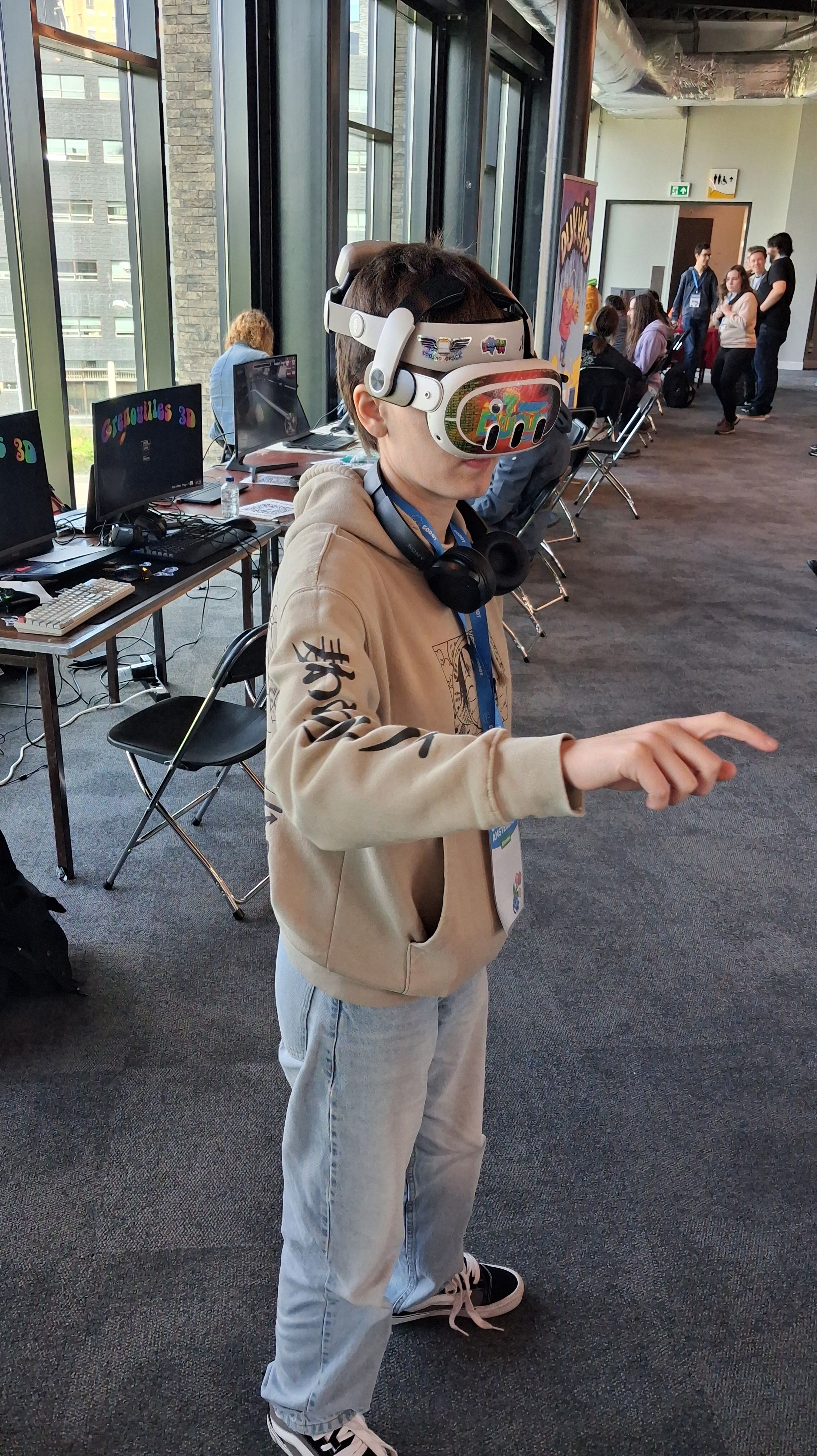
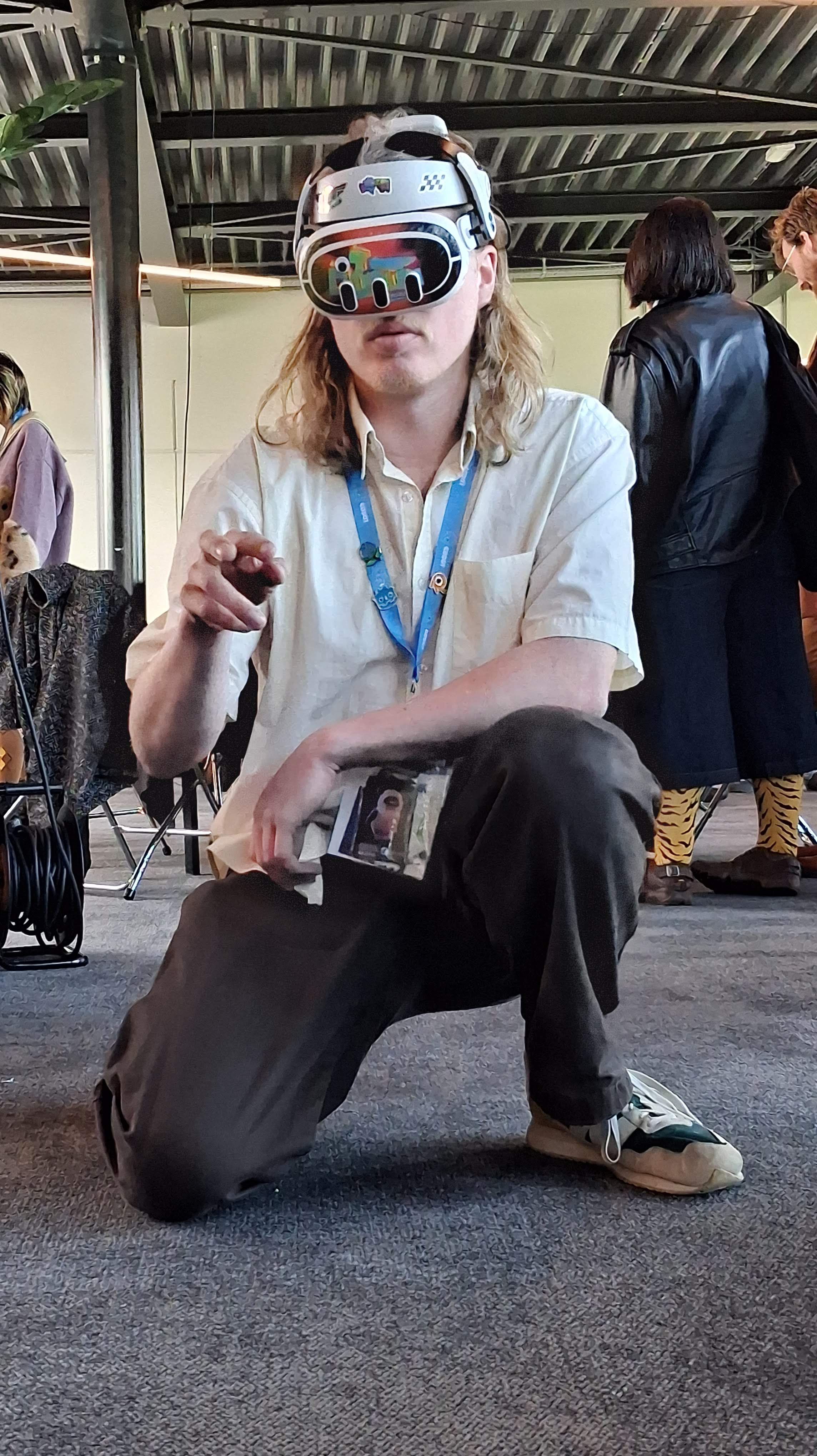
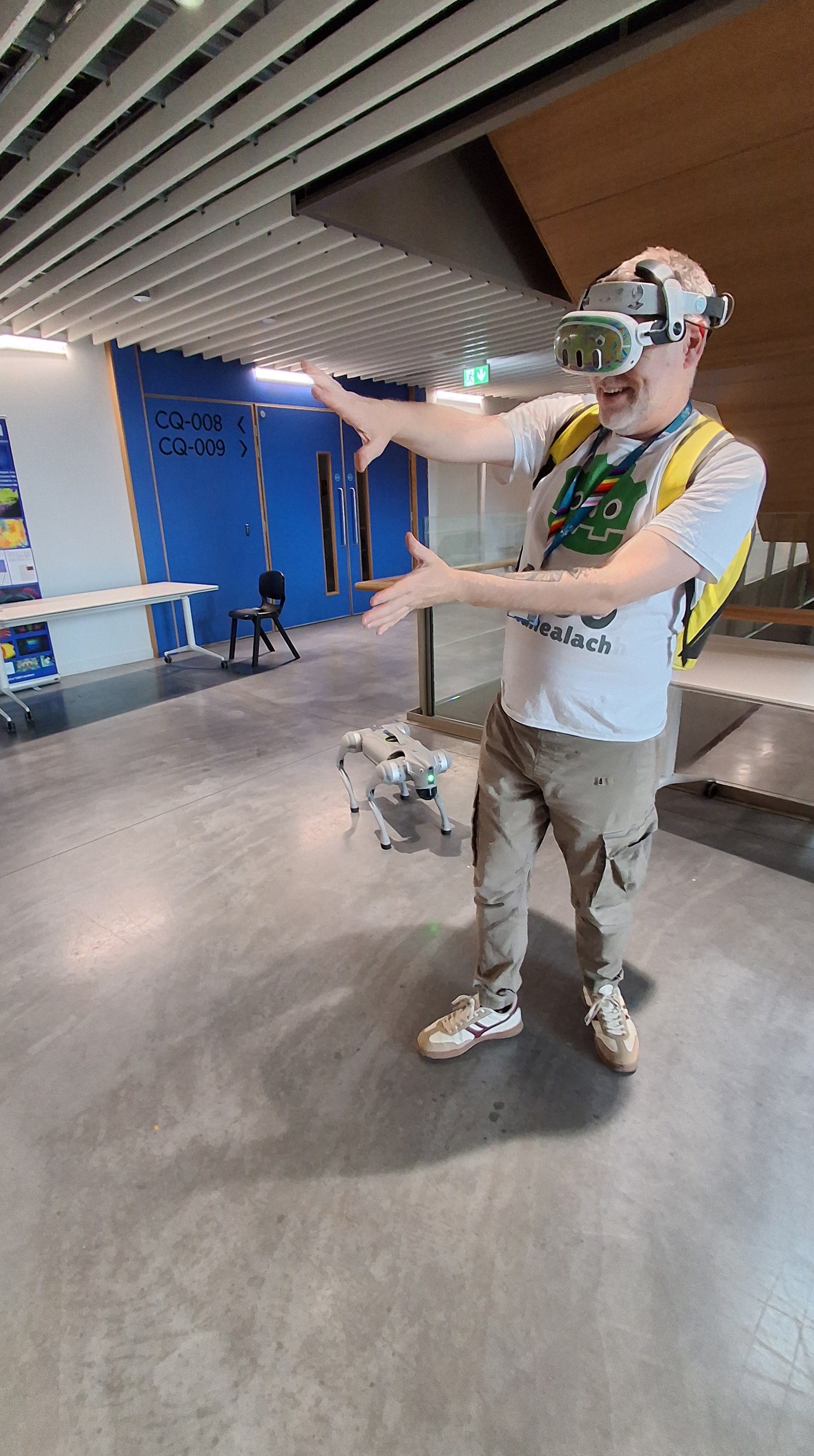
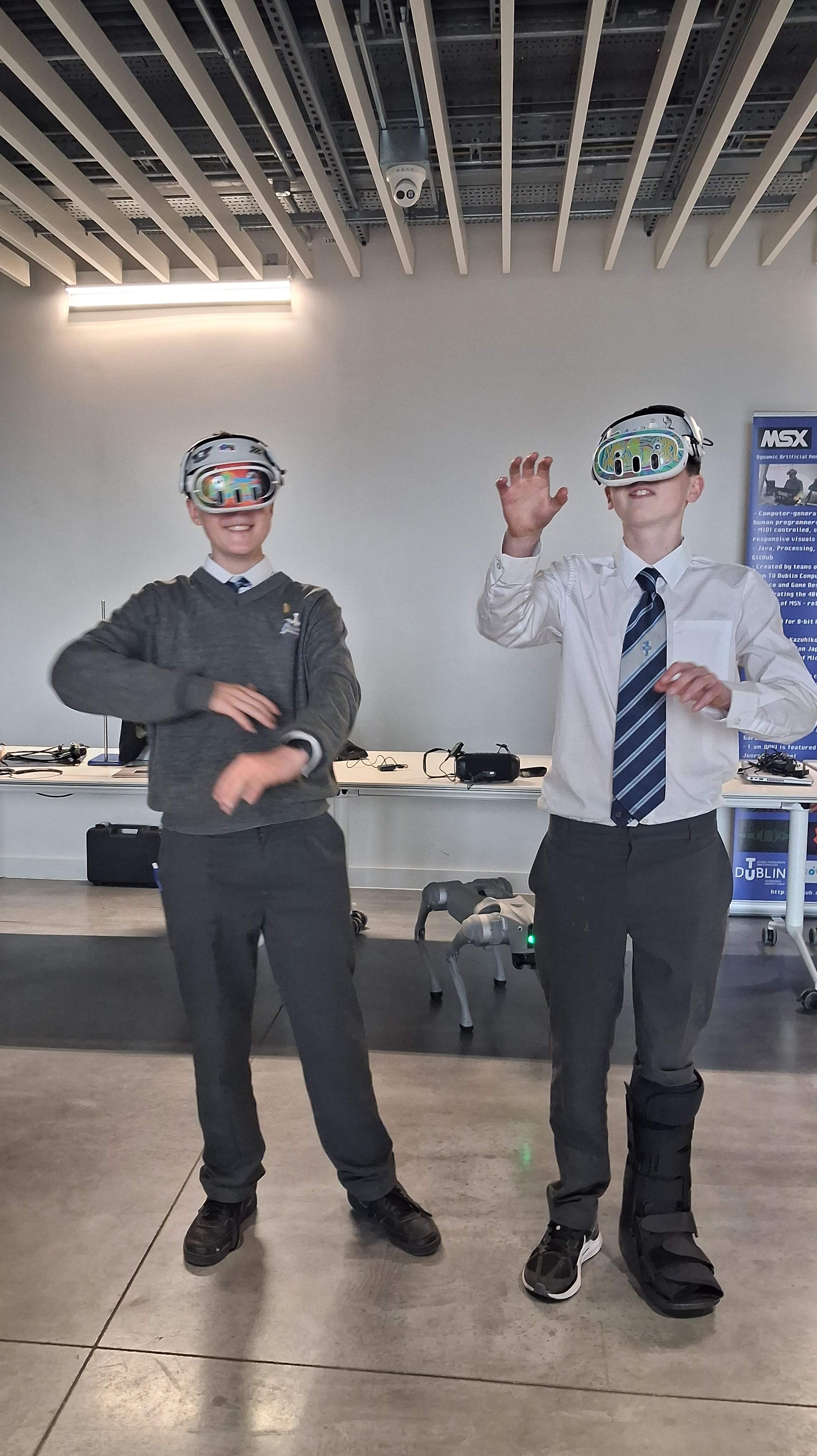
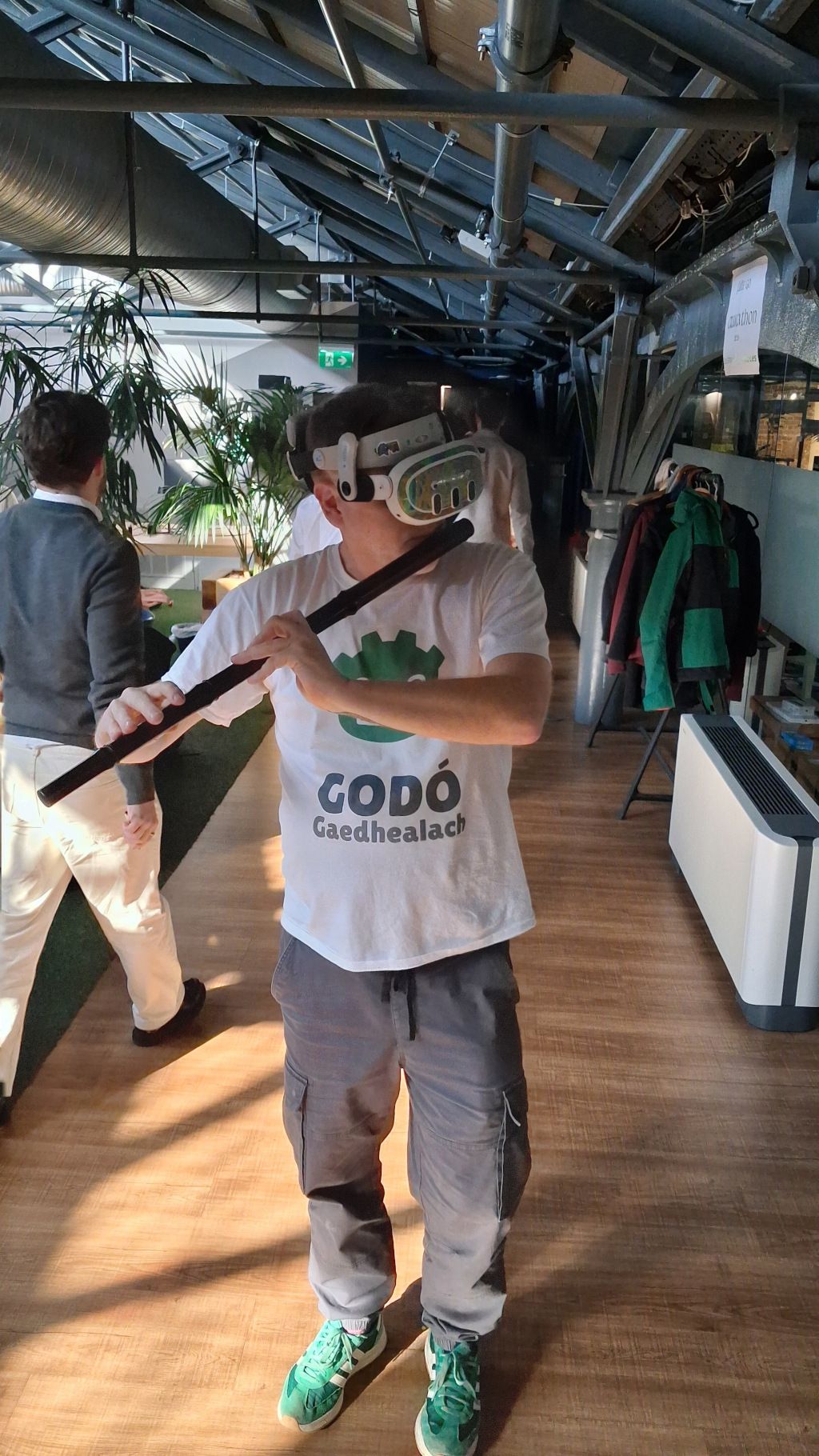
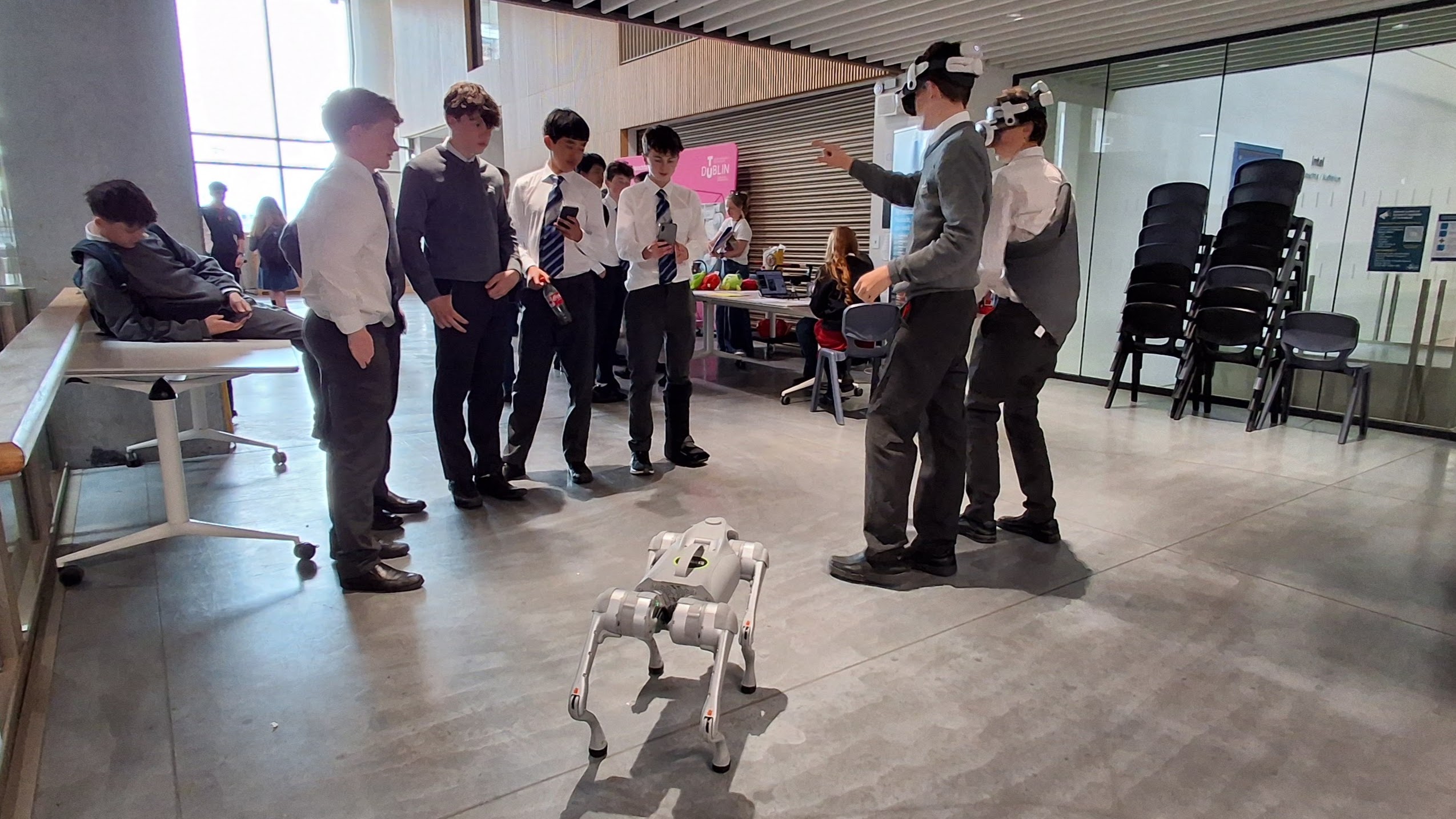
What happens when there are no boundaries between the physical, the digital, the imagination and the senses? eXtended Reality is a Level 8 module at TU Dublin’s School of Computer Science, shared with Game Design students in third year. It’s a hands-on, studio-based course where students build XR applications using open-source tools – with no boundaries or limits.
The module covers the maths underpinning spatial computing (vectors, quaternions, transforms) and also coding for XR, 3D audio, animation, motion capture, and immersive UX design. Students get their hands on XR headsets and explore how these technologies apply to music, art, education, data visualisation, human capability enhancement and cyberdelics.
Assessment is split between a written exam and a portfolio project — an XR prototype hosted on GitHub, built with FOSS tools, focused on one of those creative domains. Version control and collaborative working practices are essential.
Reading includes Jaron Lanier’s Dawn of the New Everything and Terence McKenna’s The Archaic Revival:
The more extreme, inventive, and avant-garde of the VR constructions are likely to resemble experiences with psychedelic plants rather than more conventionalized forms of art. The doorway to the realms of dream and the unconscious will be opened, and what had been merely symbolic representations of eccentric individual experience will become that experience itself.
If you’ve ever wanted to create multi-sensory musical instruments in virtual reality, build a portal to another dimension or an educational tool in mixed reality, this is a good module.
Studio Classroom runs on Friday afternoons in CQ-240:
14:00-16:00 – Instructor lead
16:00-18:00 – Self directed
- The old courses were called Games Engines 1 and Games Engines 2 and have been running for over 20 years
- There are lots of playlists of student projects on my Youtube channel.