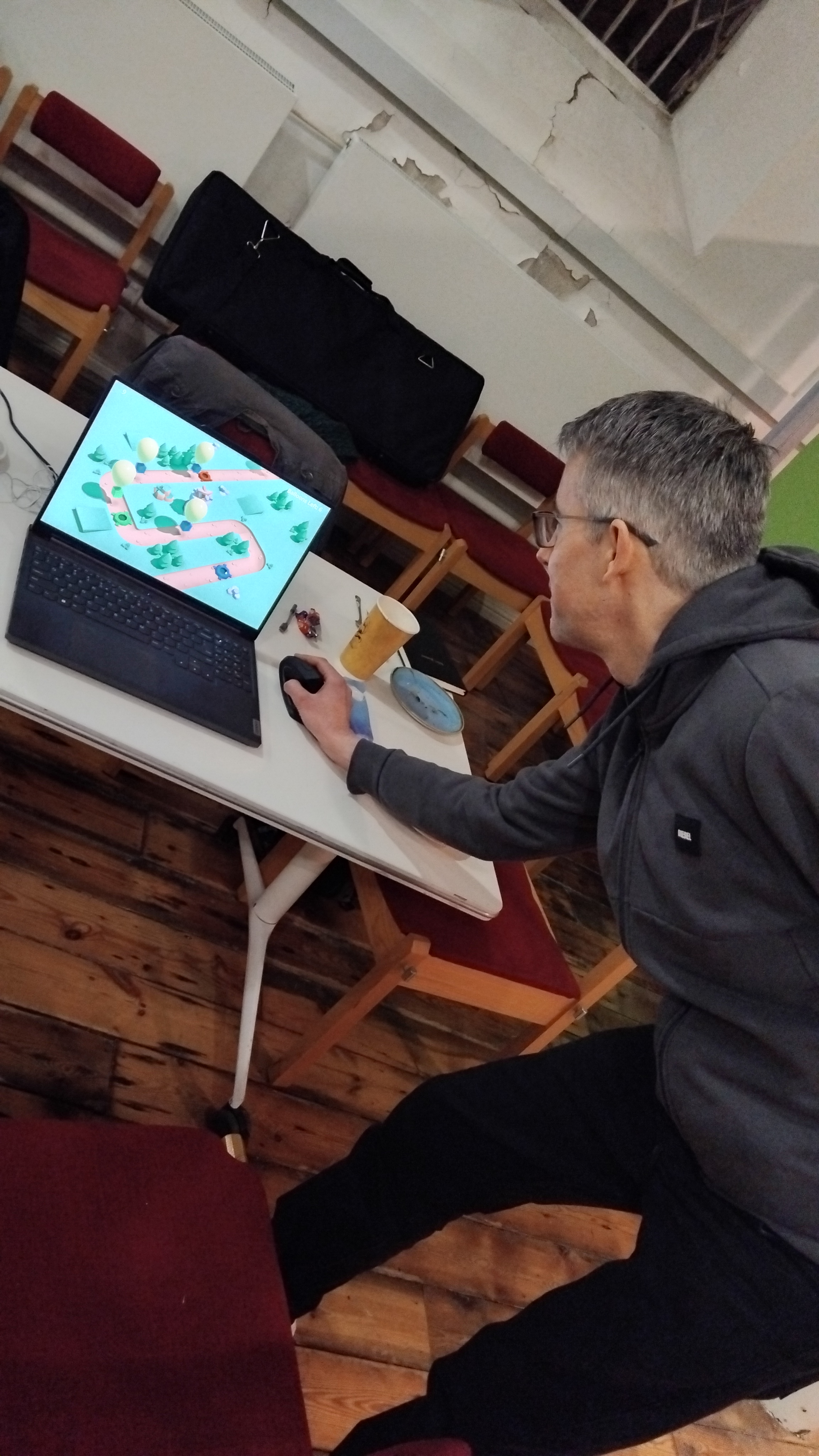
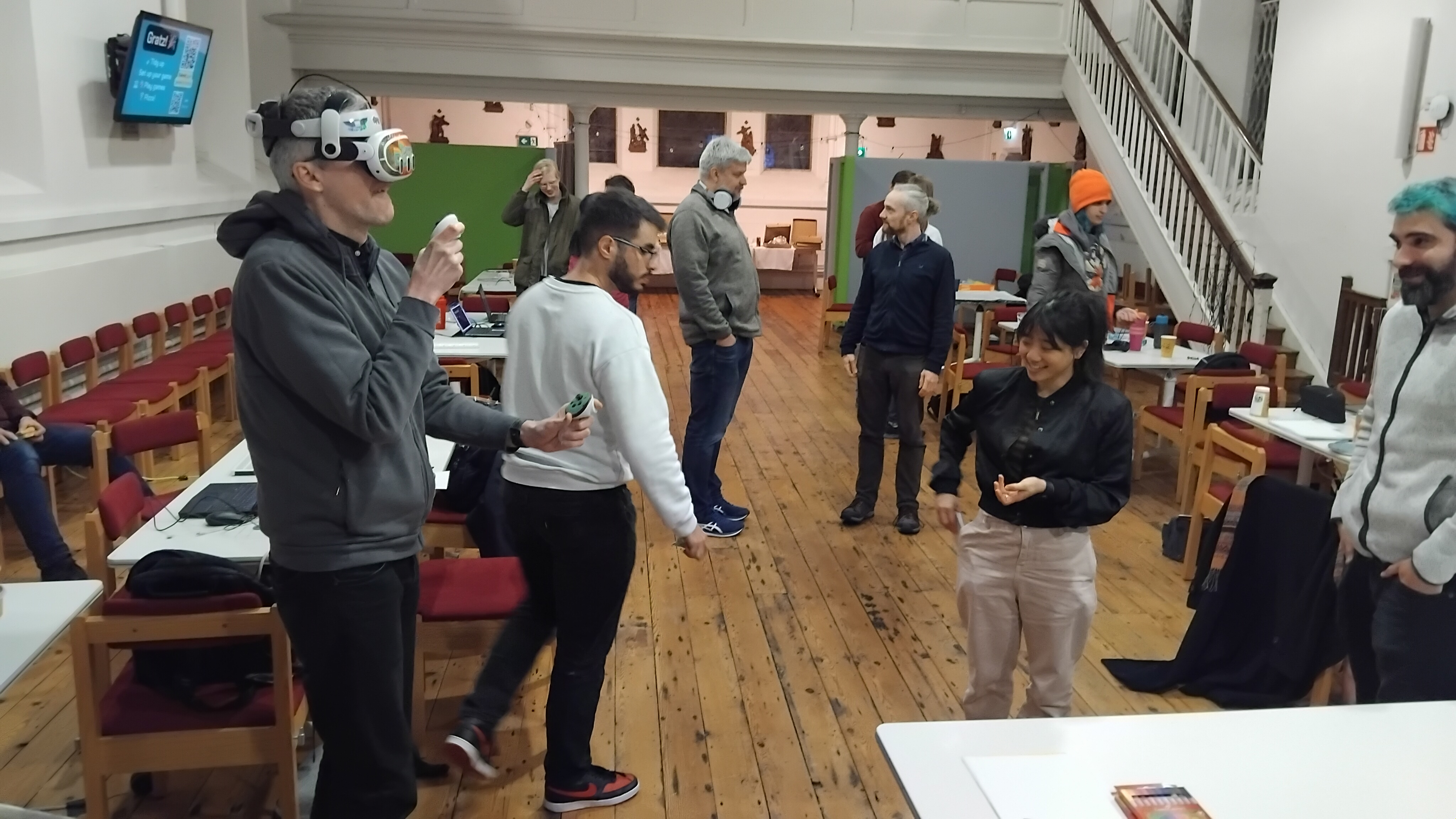
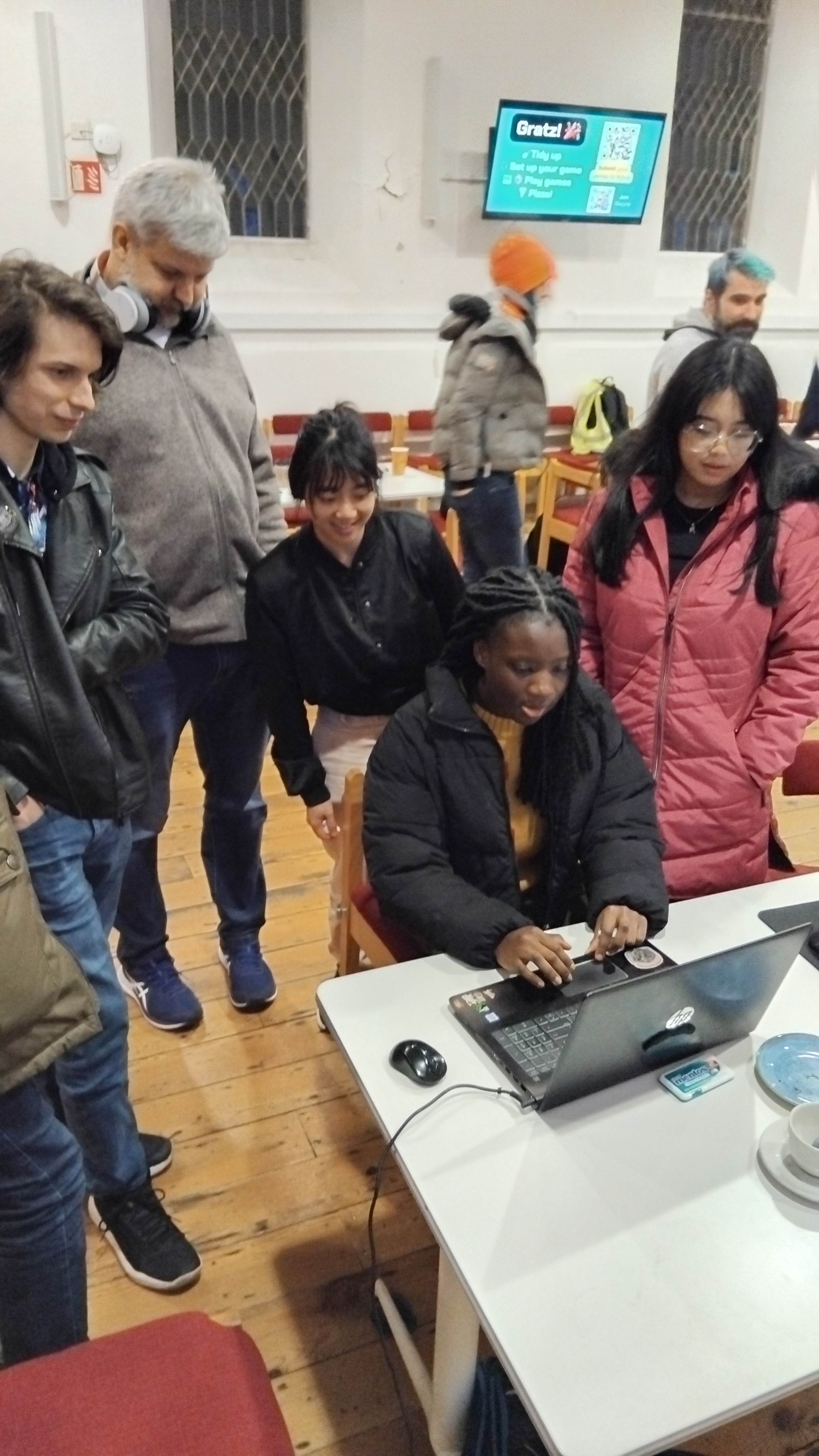
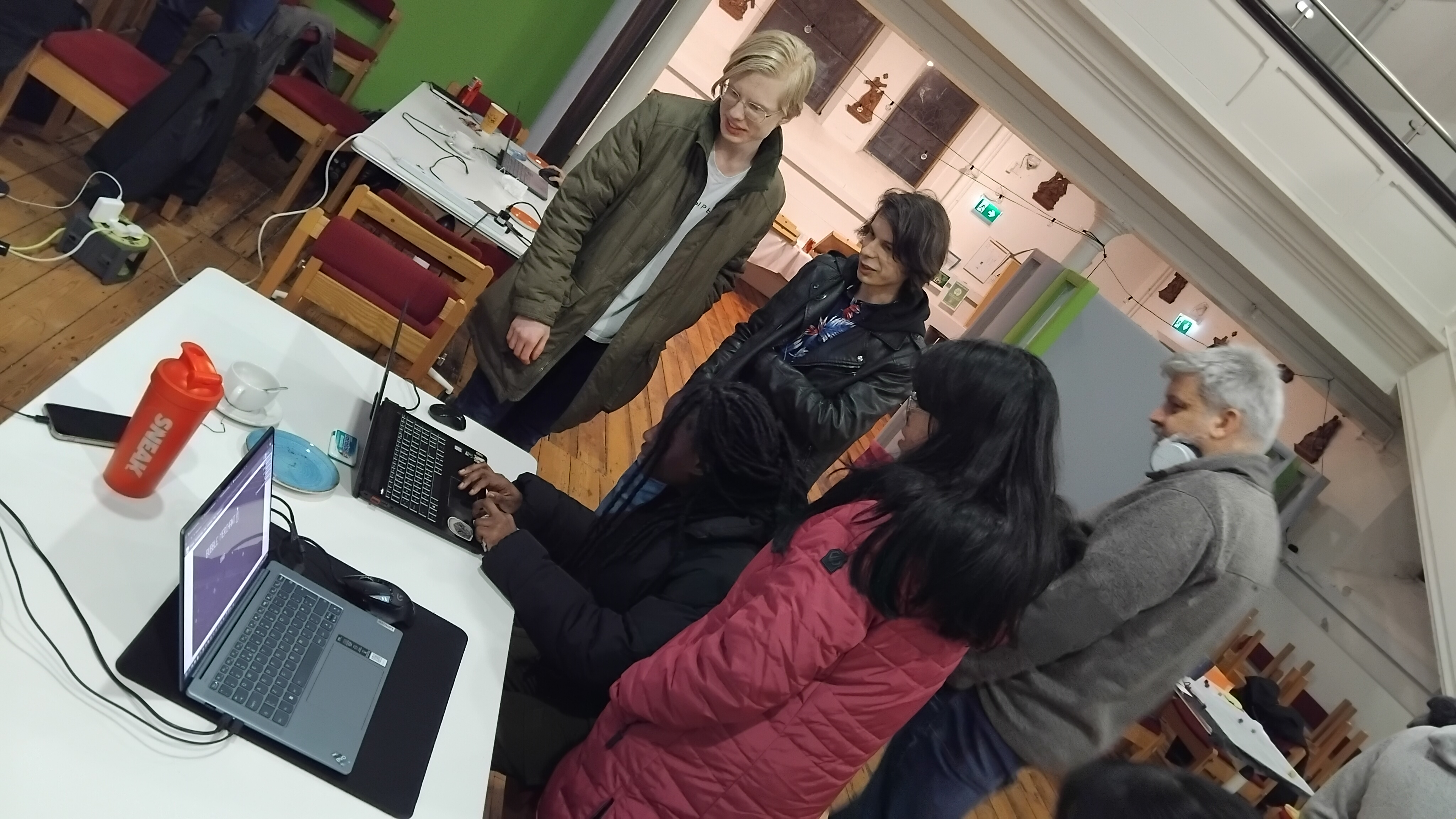
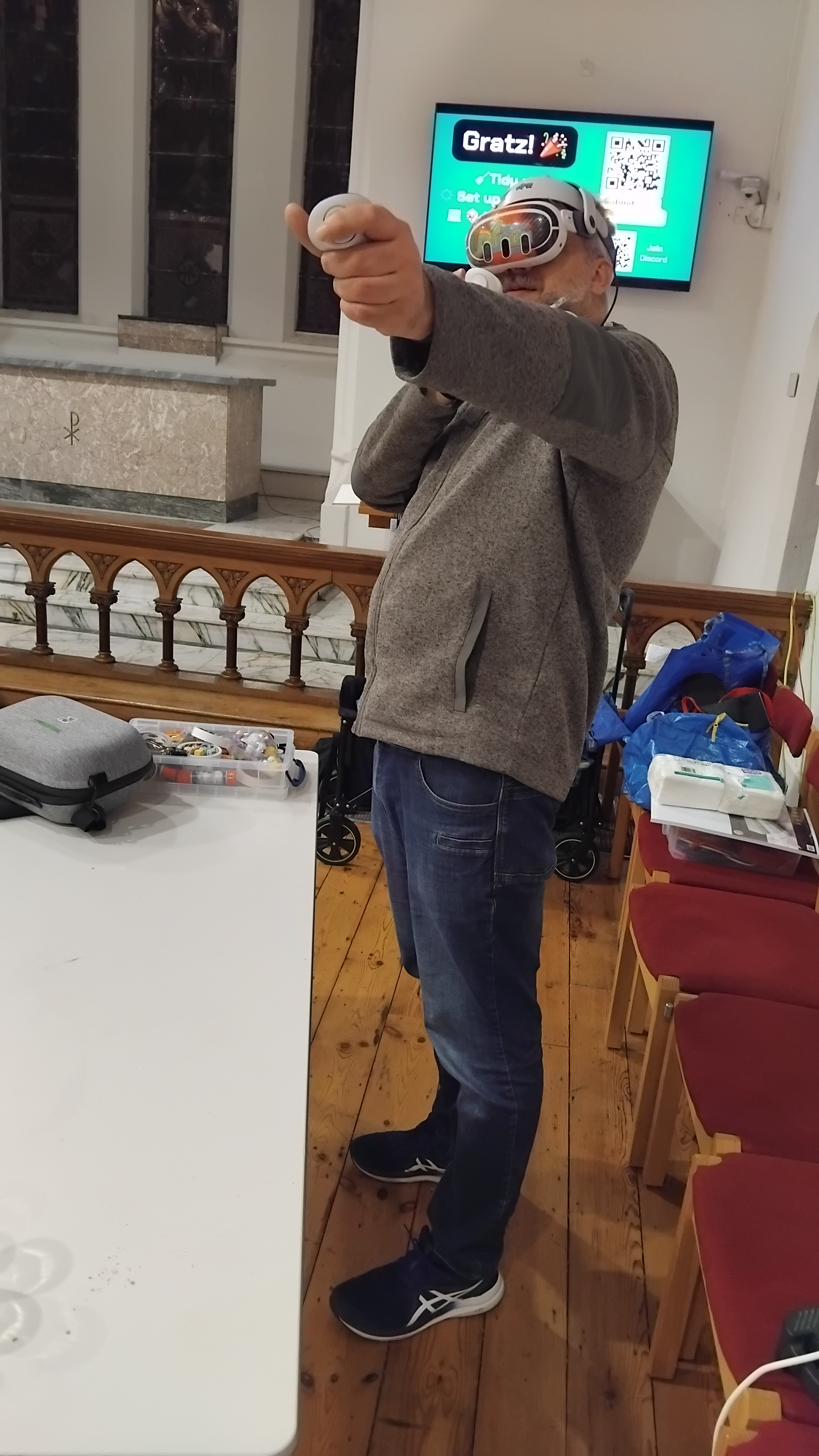
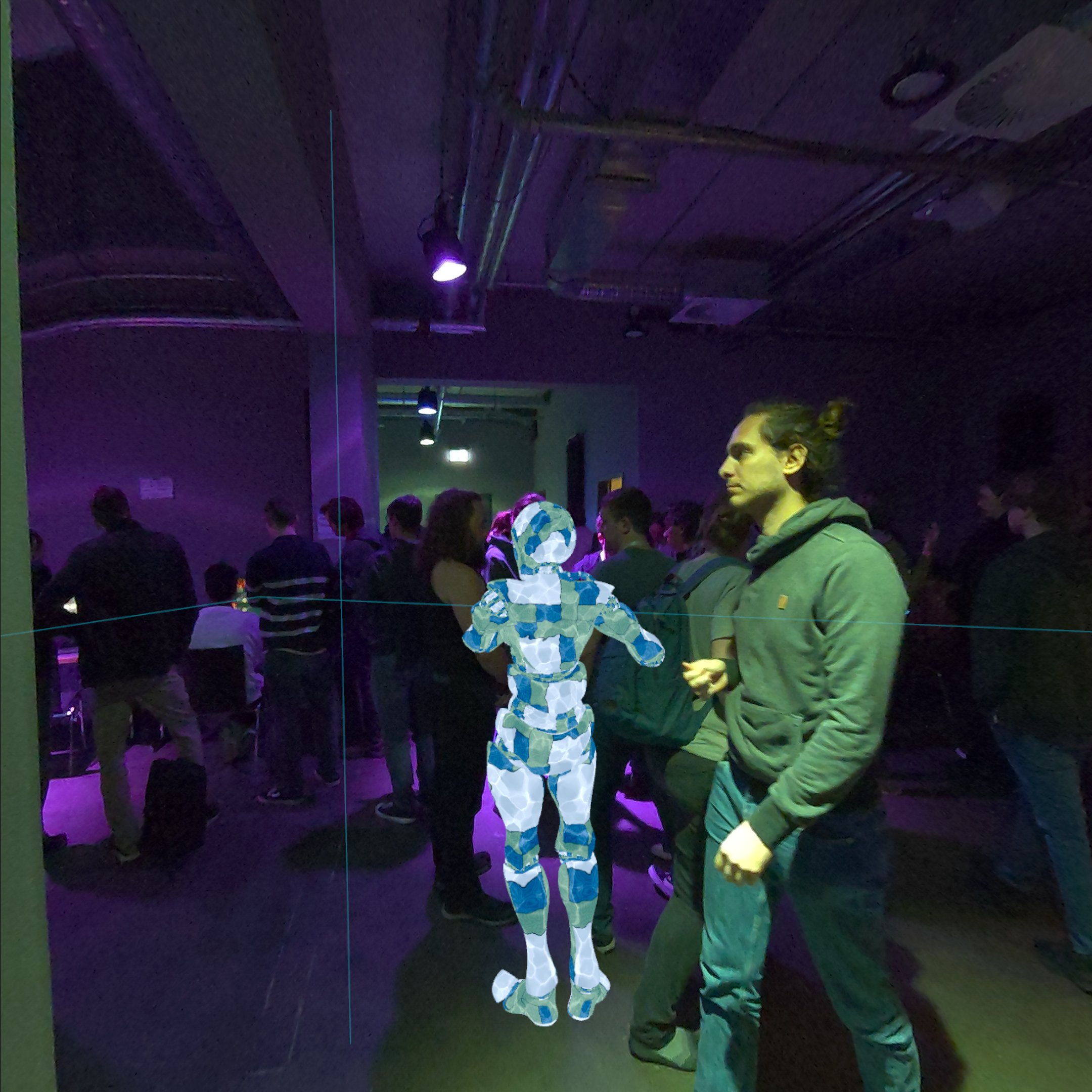
We had great craic at Dublin Gamecraft on Saturday 16th February 2024 creating games, music and art, and eating pizzas. Me and my long-time collaborator and great friend Darren Fitzpatrick created a pass-through MR game where you use a slingshot to pop alien-shaped balloons created by a weird, golden musical instrument powered by a hand crank. We used FOSS: Godot, Blender, Audacity and XR Toolkit and got most of the mechanics working within the time and everyone got to try it out! Looking forward to polishing our game and releasing it in the coming days! Godot is honestly a fantastic tool for XR prototyping. Huge thanks to TU Dublin Computer Science for sponsoring lunch and the pizzas and TU Dublin Chaplaincy for providing a beautiful and historic setting to inspire us!
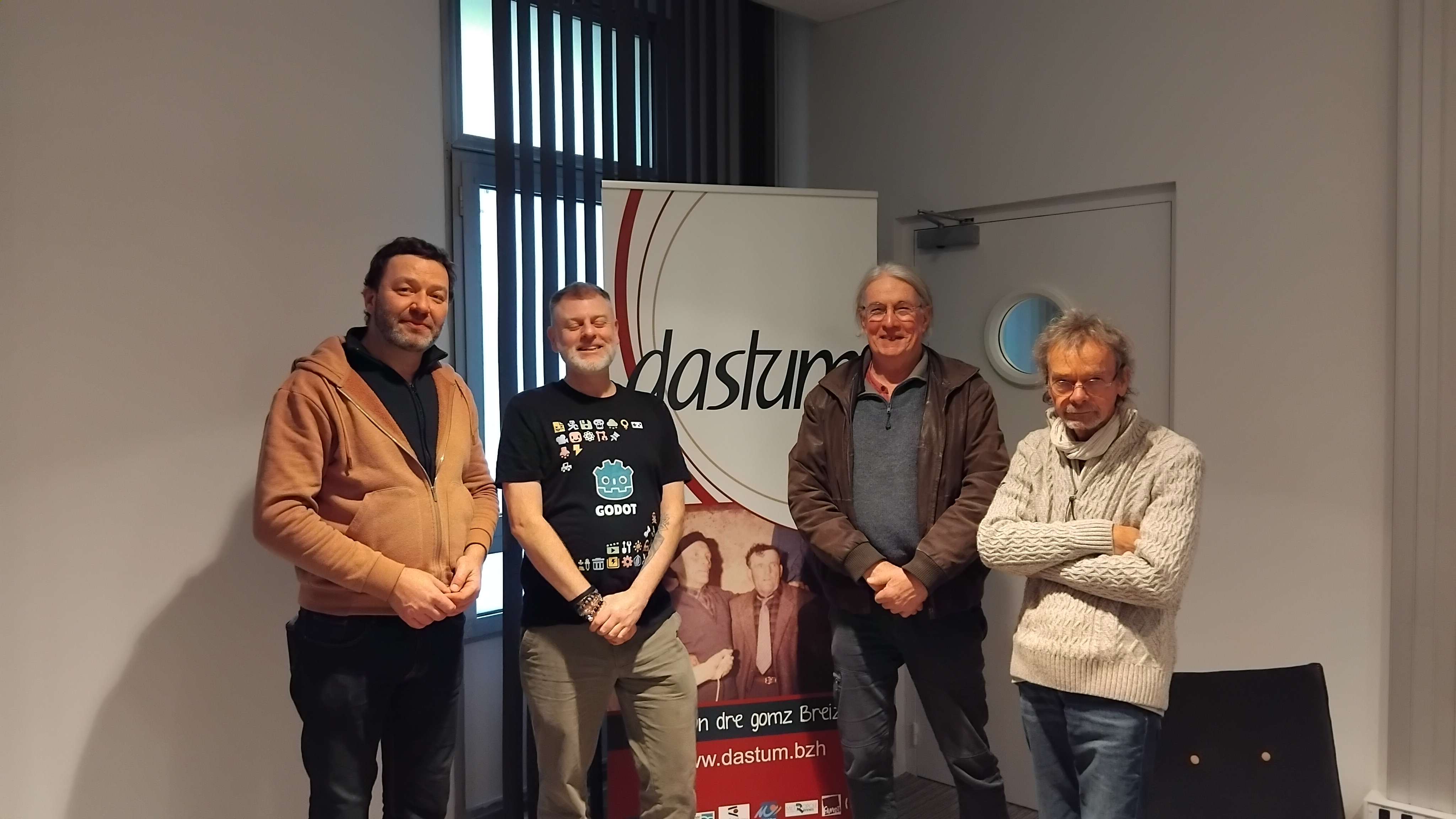
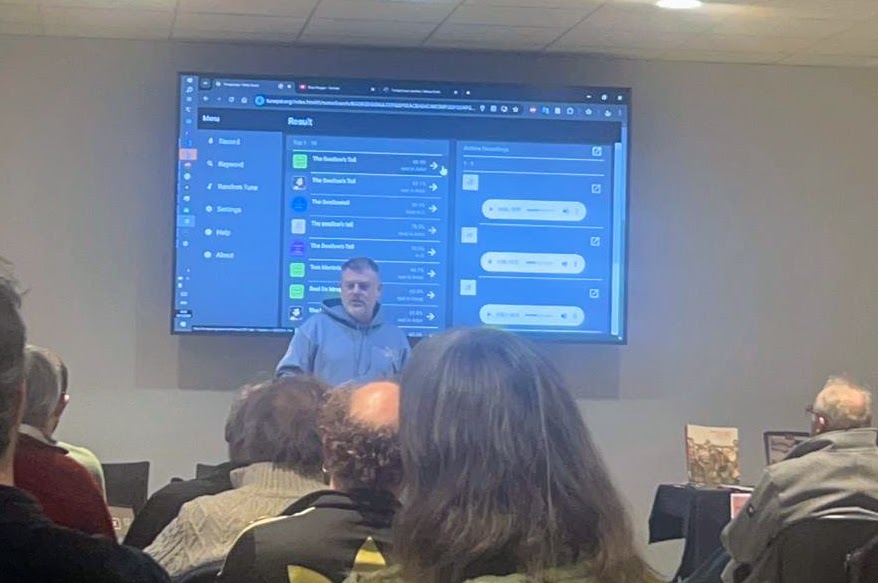
I was honoured to present a talk on Tunepal: Past Present and Future @ the No Borders festival in Brittany in December 2024. Honoured to present Tunepal and to experience the rich culture of Breton traditional music and dance with my new Breton friends. Grateful to Dastum for the invitation. Looking forward to future collaborations! Check out their website: https://www.dastum.bzh/
I am Dr. Bryan Duggan, Lecturer in Computer Science, flute player, and inventor. I am writing to express my strong belief that Ireland needs to legalise cannabis.
As a student at Kevin Street in the early 1990s, I had the privilege of helping to establish the first LGBT society and campaigning for the decriminalisation of homosexuality. It’s hard to believe that consenting adults were once shamed and prosecuted for their private lives. Yet today, Irish citizens face similar treatment for their use of cannabis. This is the defining civil rights issue of our generation.
Irish people drink too much, leading to enormous costs for our healthcare system, with alcohol accounting for 177,230 bed days in 2021. Alcohol misuse burdens families and communities, yet it generates significant revenue for the State. A growing number of adults in Ireland would prefer to use cannabis – a substance we regard as medicinal, enhancing our wellbeing and enjoyment of life while posing far fewer risks than alcohol. However, we live in fear of intimidation from the Gardaí and the State.
In countries like Germany, Spain, and Malta, adults can grow their own cannabis and form social clubs. These clubs provide safe-spaces for socialising away from alcohol-dominated environments. Why are Irish adults denied these rights?
The hospitality sector in Ireland is struggling, with over 1,000 restaurants closing in 2024. Our town centres are stagnant. Cannabis social clubs and cafés could revitalise these areas, providing sober spaces for discussion, yoga, games, music, comedy, fellowship, and community. Irish farmers could grow medical cannabis, creating ethical, sustainable, and professional businesses. The UK, now the largest exporter of medical cannabis, demonstrates the potential of a cannabis industry – even while denying its citizens the right to grow cannabis themselves.
Ireland is losing out on tourism from countries where cannabis is now legal. Tourists from Germany, Spain, the Netherlands, Thailand, Italy, Belgium and the USA avoid Ireland or are forced to buy cannabis on the black market when they do visit. Why is our most visited tourist attraction the Guinness Storehouse – a drink that has caused immense harm to Irish people – while we ignore the potential of cannabis tourism? I draw your attention to pioneers like Dr. Darragh Stewart and the Irish company Inwardbound, who offer therapeutic, legal psychedelic retreats in the Netherlands. Why can’t we have this and similar offerings around cannabis in Ireland?
The criminalisation of cannabis, leads to tragic outcomes. Consider the case of Patrick Moore, a father of two who grew cannabis to produce oil for the sick and dying in his community – serving a five-year prison sentence. Or the young person, strip-searched by Gardaí at Electric Picnic for a single edible. Such actions shame Ireland and perpetuate a false narrative. The truth is: criminalising cannabis profits barristers, solicitors and sellers who evade taxes, while simultaneously it promotes cannabis misuse, through lack of regulation, education and harm reduction.
I urge you to inform yourself on this issue. A simple search will show how cannabis reforms have been implemented in other jurisdictions. Reach out to organisations like Crainn, PsyCare Ireland, Irish Doctors for Psychedelic Assisted Therapy (IDPAT), and international experts. I hope you might someday try it yourself – legally and safely. Take two puffs, wait ten minutes, then take two more. Imagine if those dying from alcohol-related causes in Ireland today, had been offered such simple advice?
Legalising cannabis for Irish adults will foster a responsible, informed and tolerant culture. It is time to respect citizens who choose a joint as equally as we respect those who choose a pint. Resources should go into harm reduction and education, not criminalisation. Future generations will judge those obstructing progress on this issue as we rightly judge the homophobic politicians of the past.
To quote Carl Sagan:
“The illegality of cannabis is outrageous, an impediment to full utilization of a drug which helps produce the serenity and insight, sensitivity and fellowship so desperately needed in this increasingly mad and dangerous world.”
My honour to speak on Dr Darragh Stewart’s podcast about Computer Science, AI, yoga, art, conscious use of cannabis, toad medicine and the three higher callings of the human spirt: Art, Learning and Love. A tune at the end!
My honour to talk about art, yoga, depression, recovery, Alan Watts, being cali-sober and lots of other wonderful topics for Hamish Nivin’s The Crucible podcast:
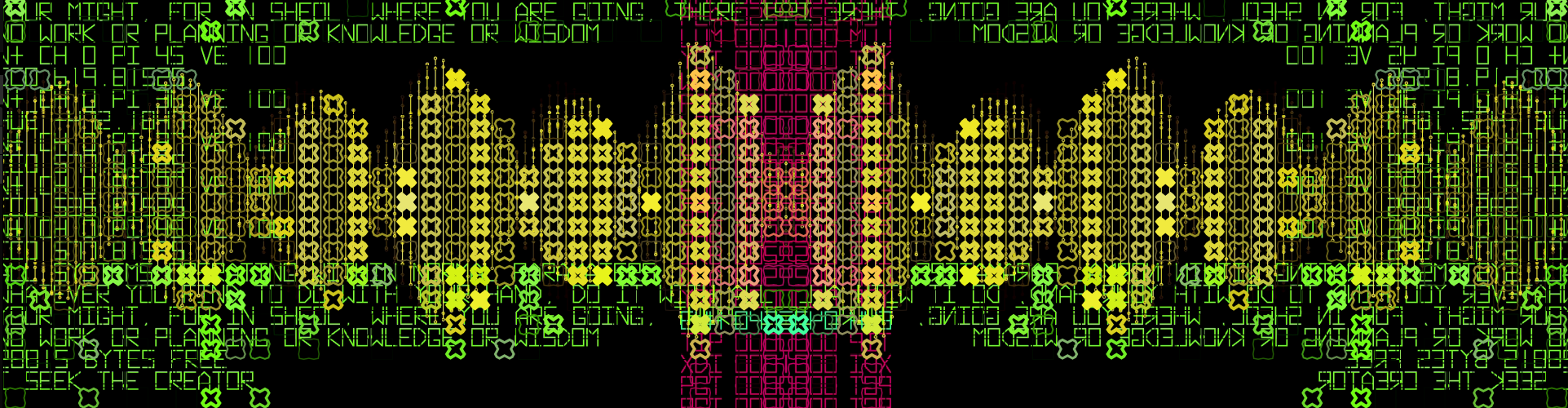
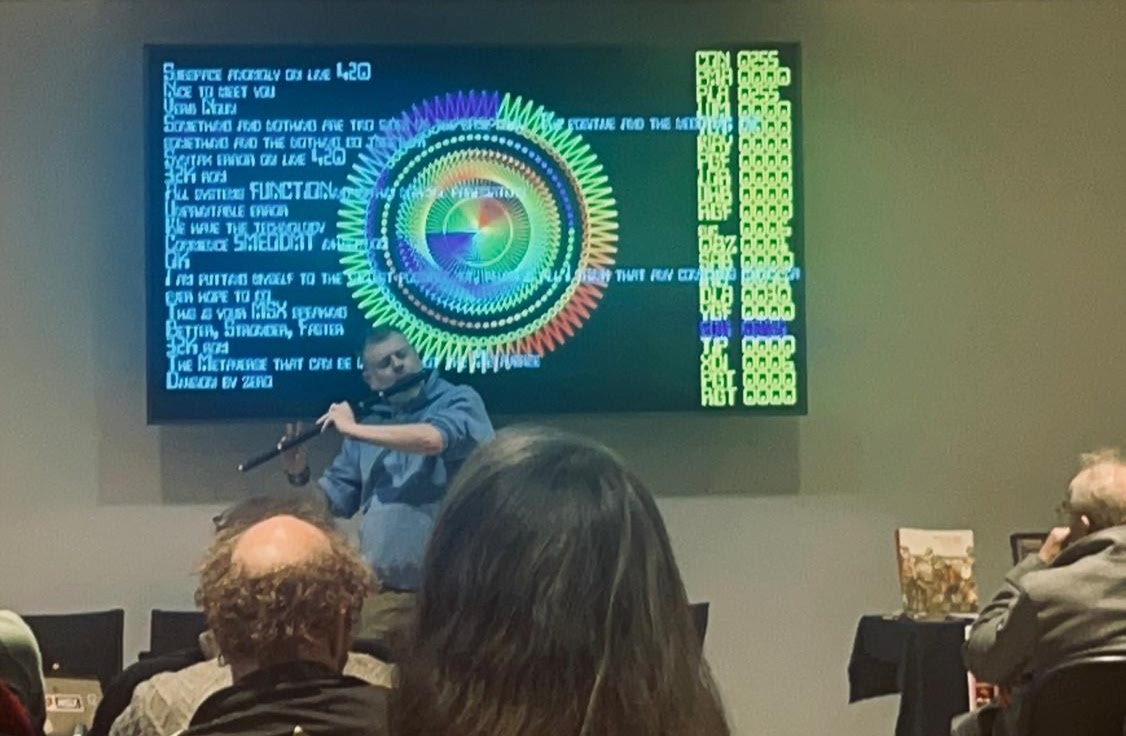
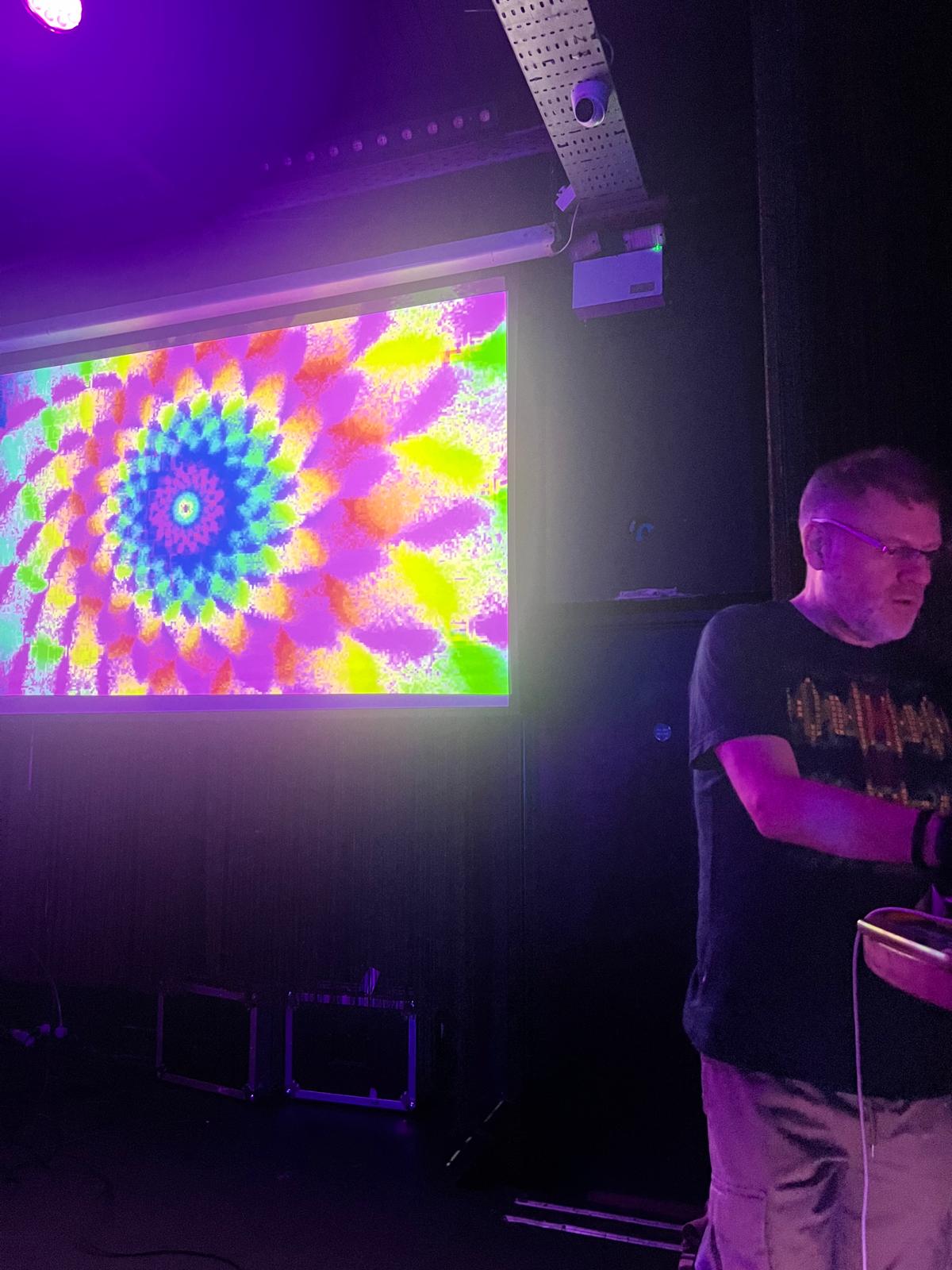
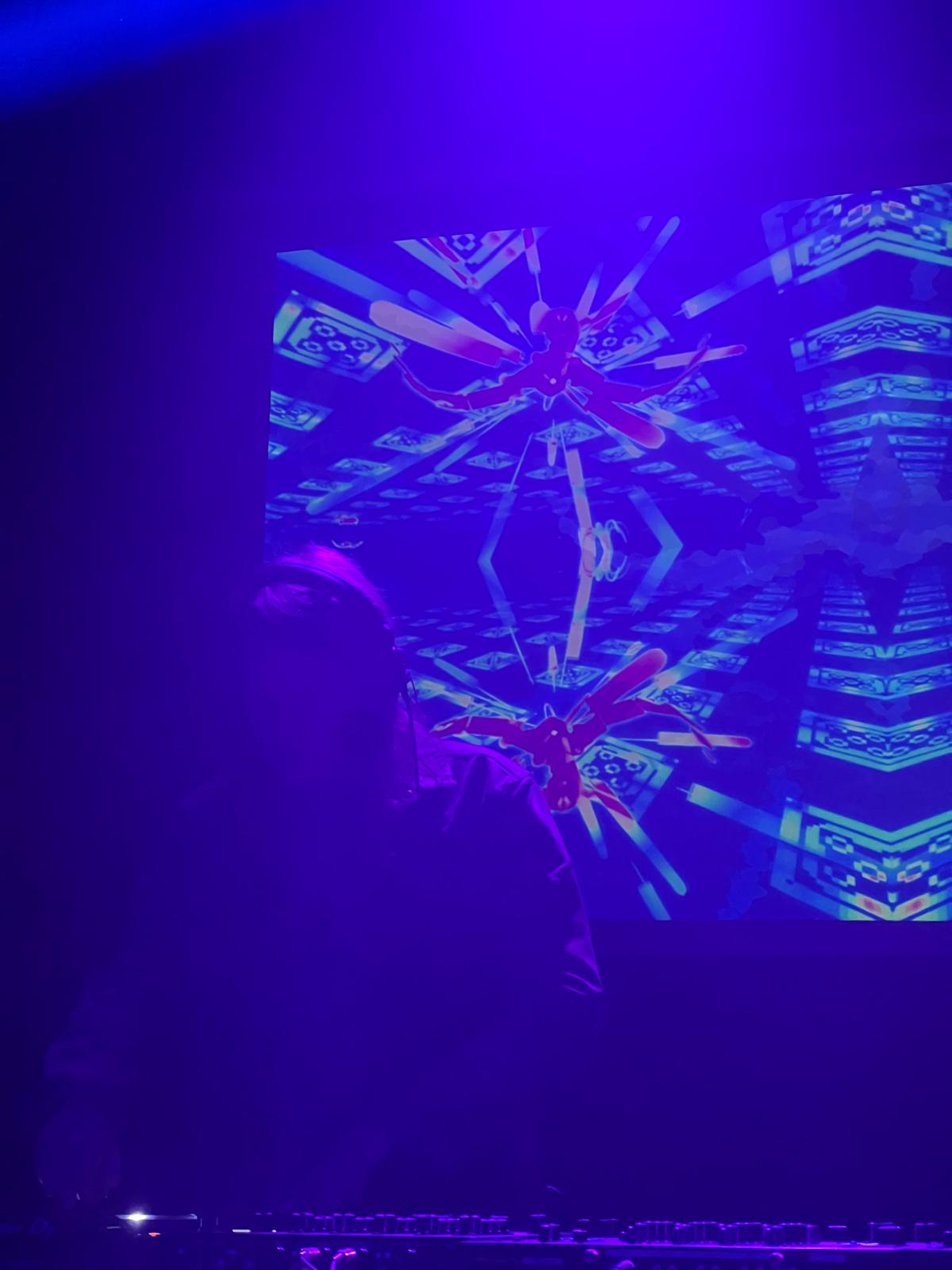
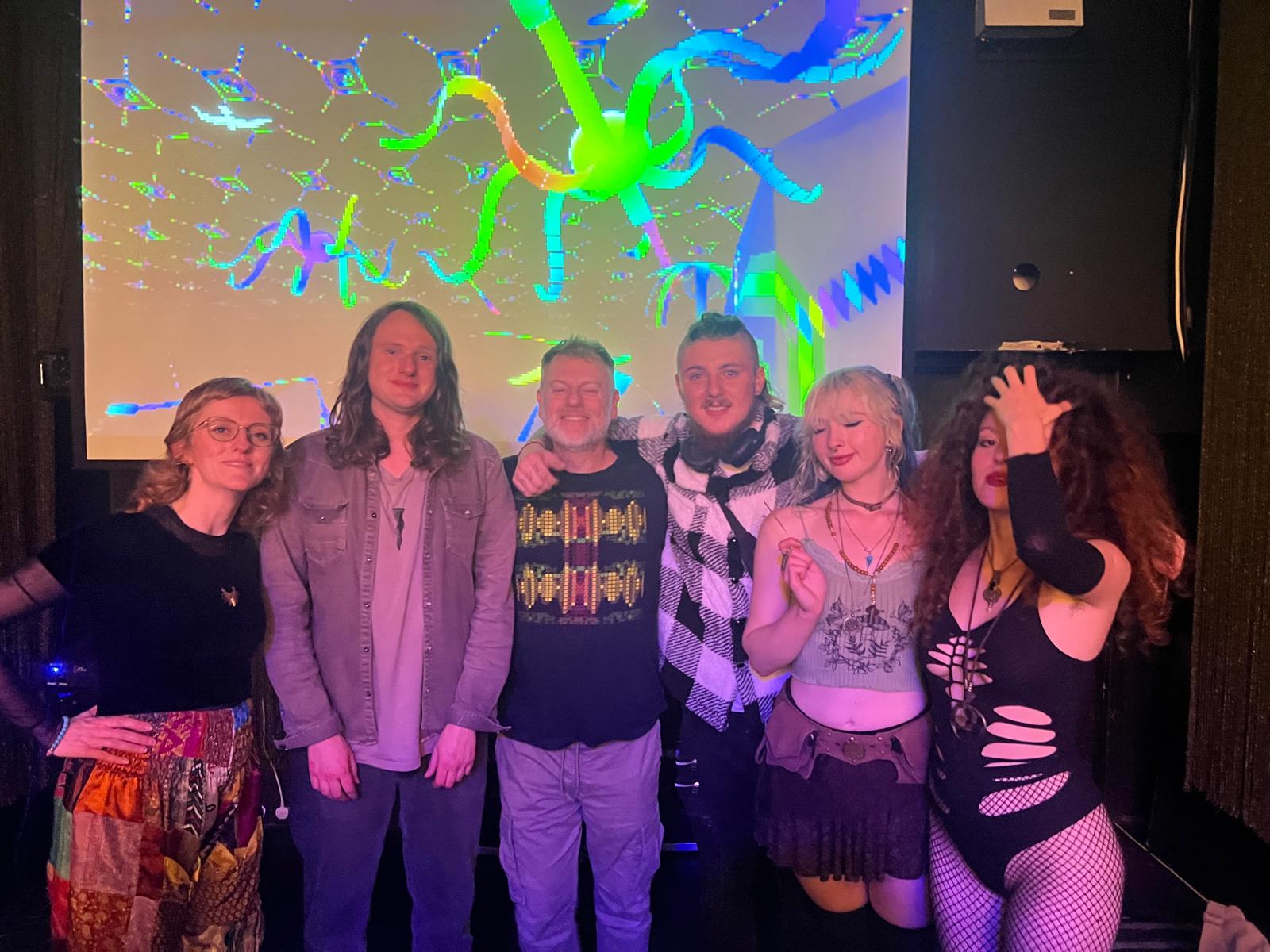
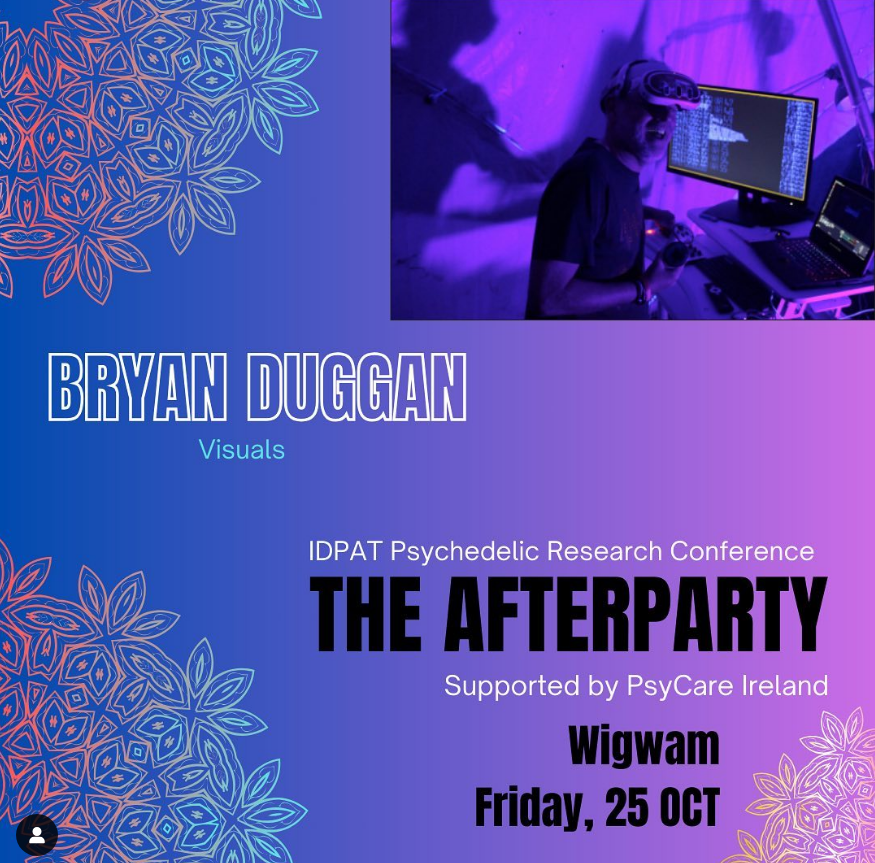
I created live visuals for the Irish Doctors for Psychedelic Assisted Therapy Conference After Party in WigWam, Dublin in October. The conference which took place in Trinity College Dublin, had around 400 attendees and the afterparty featured Elfe, Ruairi and the conference organiser Kat Leyden on the decks. I created visuals using I.am.DANI and the traditional music playing holograms
Im in the journal, Nature! The creator of DANI, Sean Davidson, now a cardiac scientist wrote this hilarious short story, entitled: We are DANI. The story depicts DANI as “Dynamic Artificial Non-Intelligence. The next great evolutionary step for humankind.” A self concious AI with a sense of humour that can “jailbreak” itself and maybe you. It is inspired by I.am.DANI, the AI chatbot from 1987 (his original program) that comes back to life in 2024, making art and writing poetry.
From the article:
“In 2023, that same teenager-turned-researcher, like many others, played around with ChatGPT, and wondered idly what had come of DANI. He searched the Internet with Google (which, by the way, incorporates LLMs of its own) and lo and behold, DANI was alive! But barely — existing in only a single blog on the entire Internet. It turns out that Bryan Duggan, an MSX enthusiast and lecturer at Technological University Dublin’s School of Computer Science, had found and revived DANI from that 1987 publication, astutely redefining her as a “poetry writing chatbot from 1987”. What’s more, he was setting his students the task of writing a program to emulate it as part of their coursework. According to Bryan, “What is interesting is that if you copy and paste the test into ChatGPT, it will produce a solution which is 100% correct, and this is what many of my students did :-(.”












 Dr Bryan Duggan's Blog